Why Does My House Get Dustier in the Winter?
You dusted Saturday. By Tuesday there’s a gray film on the TV stand again. If your house seems dusty all winter, you’re not imagining it, and it doesn’t mean you’re a bad housekeeper. Cold weather changes how your home breathes. Most of the causes are easy to spot once you know where to look, and most of them are cheap to fix.
Here are the seven most common reasons we see in Fredericksburg-area homes, and what to do about each one.
Why is my house so dusty in winter? 7 common causes
1. The house is sealed up tight
In spring and fall, open windows swap stale indoor air for fresh outdoor air. In winter everything stays shut. You’re still making dust at the same rate (skin cells, fabric fibers, pet hair, cooking residue), but less of it ever leaves. It just builds up.
2. Your furnace runs for hours a day
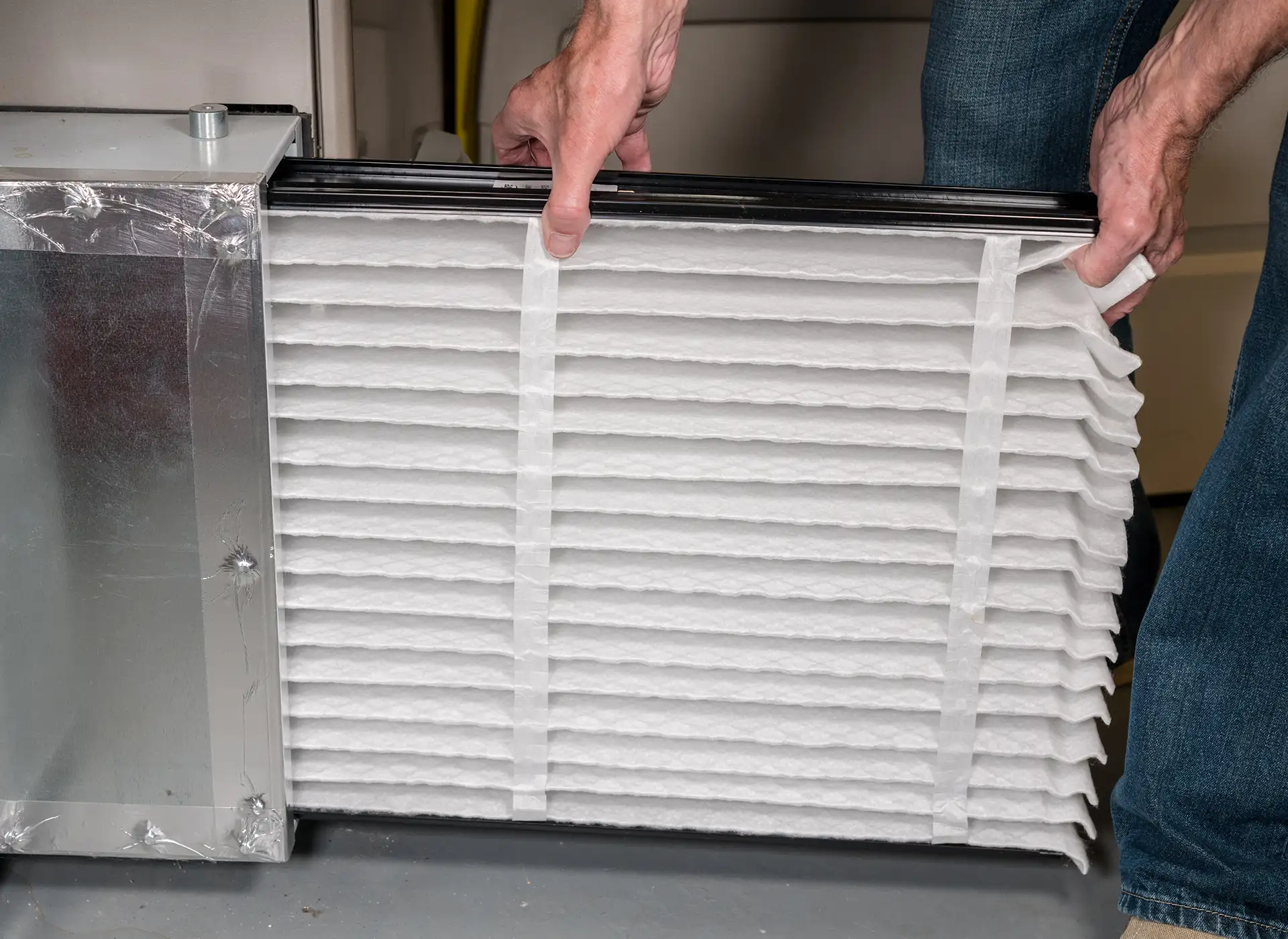
Your heating system pulls air from your rooms, pushes it through a filter, and sends it back out. In January it may run most of the day. That’s good if your filter is clean and fits snugly. If the filter is clogged, cheap, or the wrong size, air slips around the edges and the same dust goes around again. A filter that lasted three months in October may be packed in six weeks of heavy heating.
3. Dry air makes dust cling and float
Cold outdoor air holds little moisture, and heating it dries it out even more. Indoor humidity often falls below 30% in winter. Dry air builds static, so dust sticks to screens, electronics, and plastic surfaces, and fine particles stay in the air longer before they settle. You’ll often notice static shocks at the same time.
4. Everyone’s home more
More time indoors means more of everything that becomes dust. That includes skin flakes, lint from blankets and sweaters, and fur from a dog that would normally be out in the yard. Fleece throws and flannel sheets shed a lot more than summer cotton.
5. Fireplaces and wood stoves
A crackling fire is part of a Virginia winter, but it adds ash and fine smoke particles to the house. Every time you open the stove door, carry in firewood, or clean out the firebox, some of it escapes into the room.
6. Holiday boxes from the attic and basement
Decoration bins sit in dusty storage for 11 months. When they come down, that dust comes with them. It happens again when you pack everything back up in January.
7. Leaky return ducts pull in attic and crawlspace dust
This is the cause most homeowners never think about. Your return ducts are supposed to pull air from your living space. If they have gaps, loose joints, or disconnected sections running through the attic, crawlspace, or garage, they pull air from those spaces instead. That air carries dust and insulation fibers. If the leak is past the filter, the dust goes straight into your house. ENERGY STAR lists a dusty house as one of the common signs of leaky ductwork.
Signs this might be your problem: dust that comes back days after cleaning, rooms that are hard to heat, and a musty smell when the system kicks on.
How to make your house less dusty in winter
Start with the free and cheap fixes. Most homes see a real difference from the first three.
- Check your filter every month from November to March. Hold it up to a light. If you can’t see through it, change it. Make sure it’s the exact size printed on the old one and sits flush in the slot with no gaps.
- Upgrade the filter if your system can handle it. The EPA suggests a filter rated MERV 13, or as high as your system will accommodate. A thicker filter, or a dedicated media cabinet, catches more fine dust without choking airflow. Our guide to whole-home air filtration options explains what works with which systems.
- Keep indoor humidity between 30% and 50%. A $15 hygrometer tells you where you stand. If you’re below 30%, a portable or whole-house humidifier helps with static, dry skin, and clingy dust. Don’t go above 50% in cold weather, or you’ll get condensation on windows.
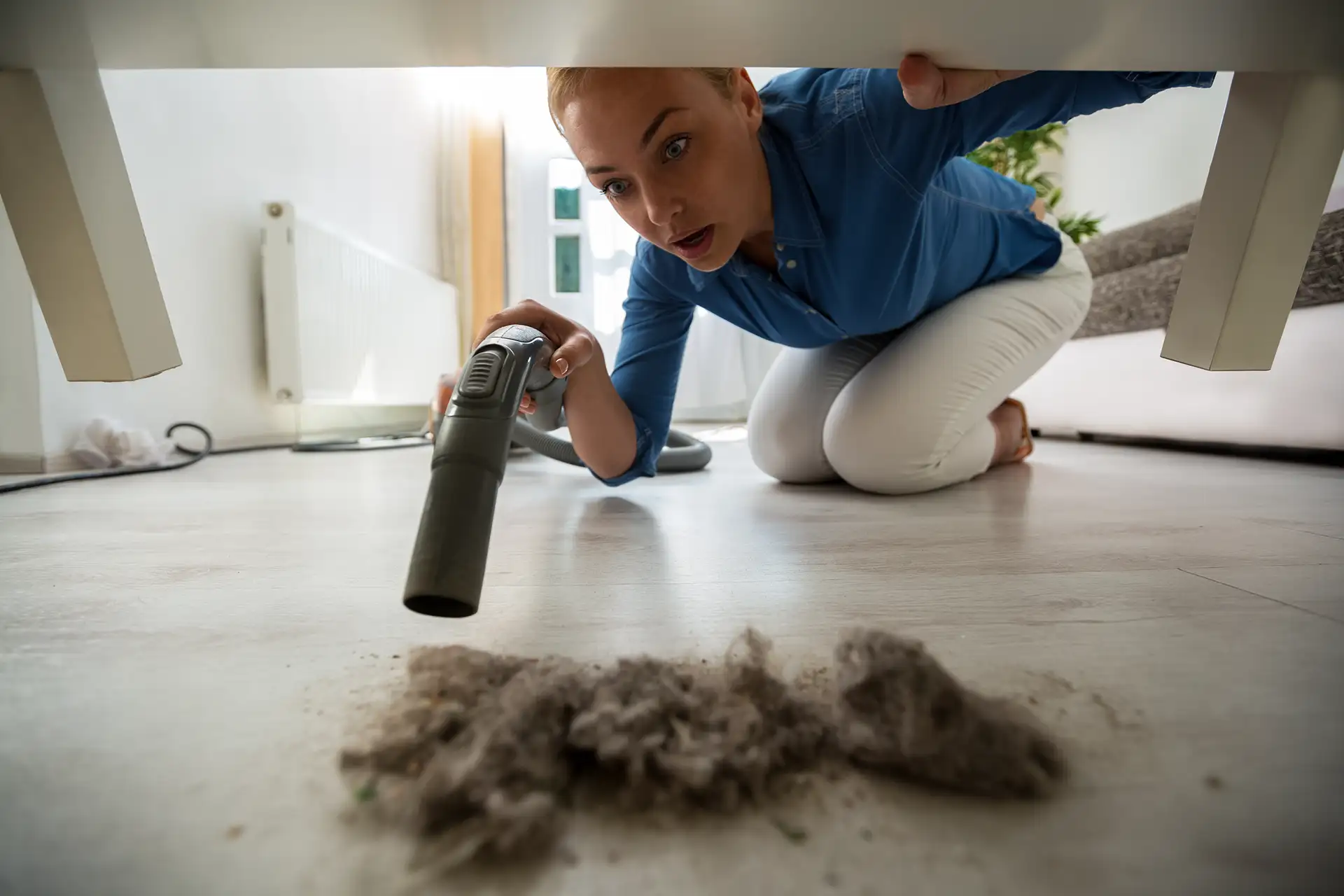
- Dust damp, vacuum with a HEPA vacuum. A dry cloth and a cheap vacuum mostly stir dust back into the air. A slightly damp microfiber cloth traps it.
- Wash throws and bedding weekly. Fleece and flannel are major lint sources in winter.
- Wipe holiday bins before they come inside, and do it in the garage, not the living room.
- Get leaky return ducts checked and sealed. If dust keeps coming back no matter what you do, a duct inspection is the next step. Sealing return leaks with mastic or foil tape (never cloth duct tape) keeps attic and crawlspace air out of your house.
Will duct cleaning fix a dusty house in winter?
We clean ducts for a living, so here’s the honest answer: duct cleaning alone usually isn’t the fix for everyday winter dust. The EPA notes that a light layer of household dust inside ducts isn’t a known health risk, and that dust stuck to duct walls tends to stay there.
Duct cleaning makes sense when an inspection finds something specific, like heavy buildup or debris blowing out of the supply vents, signs of rodents or insects, or visible mold. It also makes sense after a renovation that sent drywall dust through the system. We cover this in detail in Will duct cleaning reduce the dust in my house?
When a dusty house in winter needs a pro
Call us if you’ve changed the filter, fixed the humidity, and the dust still comes back within a few days. Also call if you notice:
- Dust or debris puffing out of vents when the heat kicks on
- A musty or “attic” smell from the registers
- Rooms that are noticeably colder than the rest of the house
- Torn, crushed, or disconnected ductwork in the attic or crawlspace
Breathe Easy owner Brian Eberly is NADCA certified and holds a Virginia Class A HVAC license. Through Breathe Easy Heating and Cooling we can inspect your ductwork, find return leaks, recommend a filtration upgrade, and clean the system if it actually needs it. We serve Fredericksburg, Spotsylvania, Stafford, King George, and Caroline County.
Frequently asked questions
Your home is closed up, the furnace runs longer, and the air is drier. Dust has fewer ways out, circulates more, and clings to surfaces because of static.
Check it monthly during heating season. Standard 1-inch filters often need replacing every 1 to 2 months in winter. Thicker 4- to 5-inch media filters last longer. Follow the manufacturer’s interval.
Between 30% and 50%. Below 30%, static and dry air make dust worse. Above 50% in cold weather, you risk condensation on windows and exterior walls.
Yes. Leaky return ducts in an attic, crawlspace, or garage can pull dusty, unfiltered air into the system and blow it through your home. Sealing those leaks is often the biggest single fix for stubborn dust.
Not on its own in most homes. It helps when an inspection shows heavy buildup, debris coming from the vents, pests, or mold. Start with the filter, humidity, and duct leaks.
Ready to breathe easy this winter?
If the dust keeps winning, let us take a look. We’ll tell you what’s actually causing it, even if the answer is a $20 filter.
When It Comes to Your Family’s Comfort, You Can Breathe Easy.
Book online or call 540-656-9441.